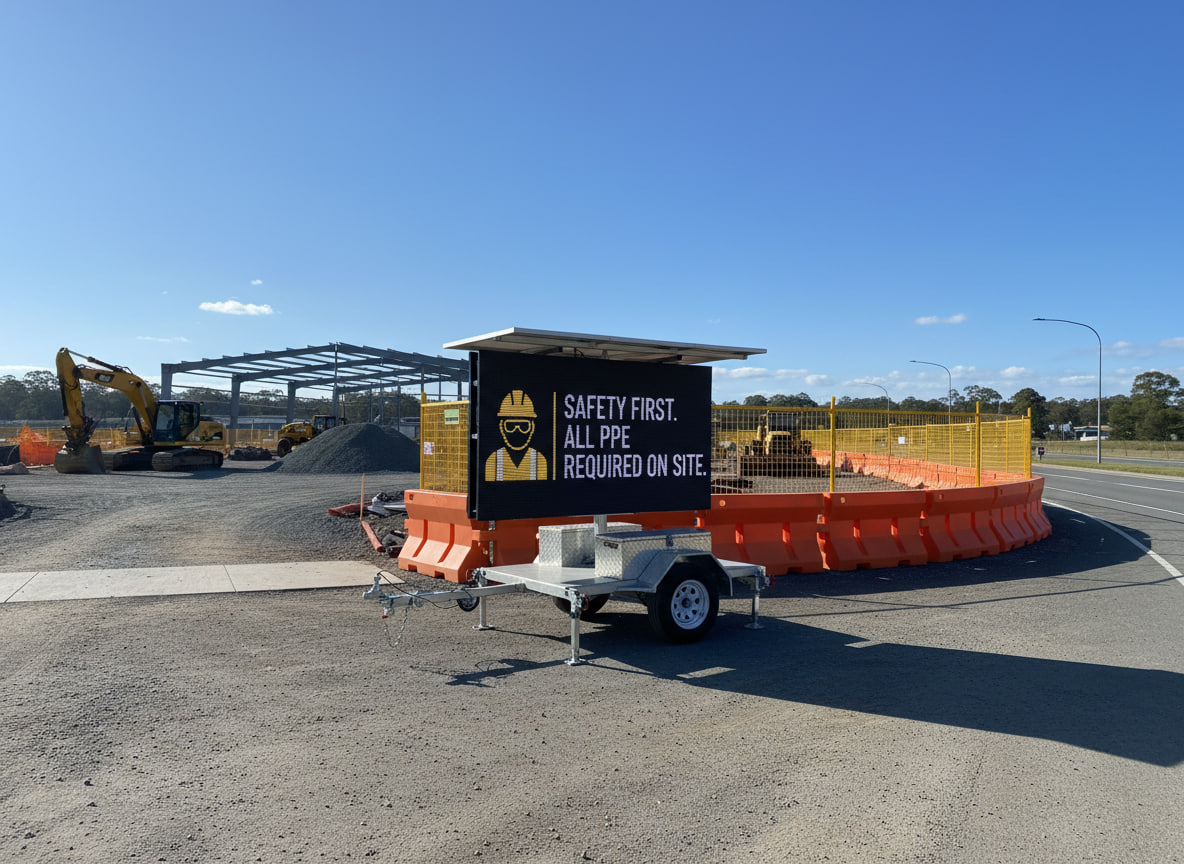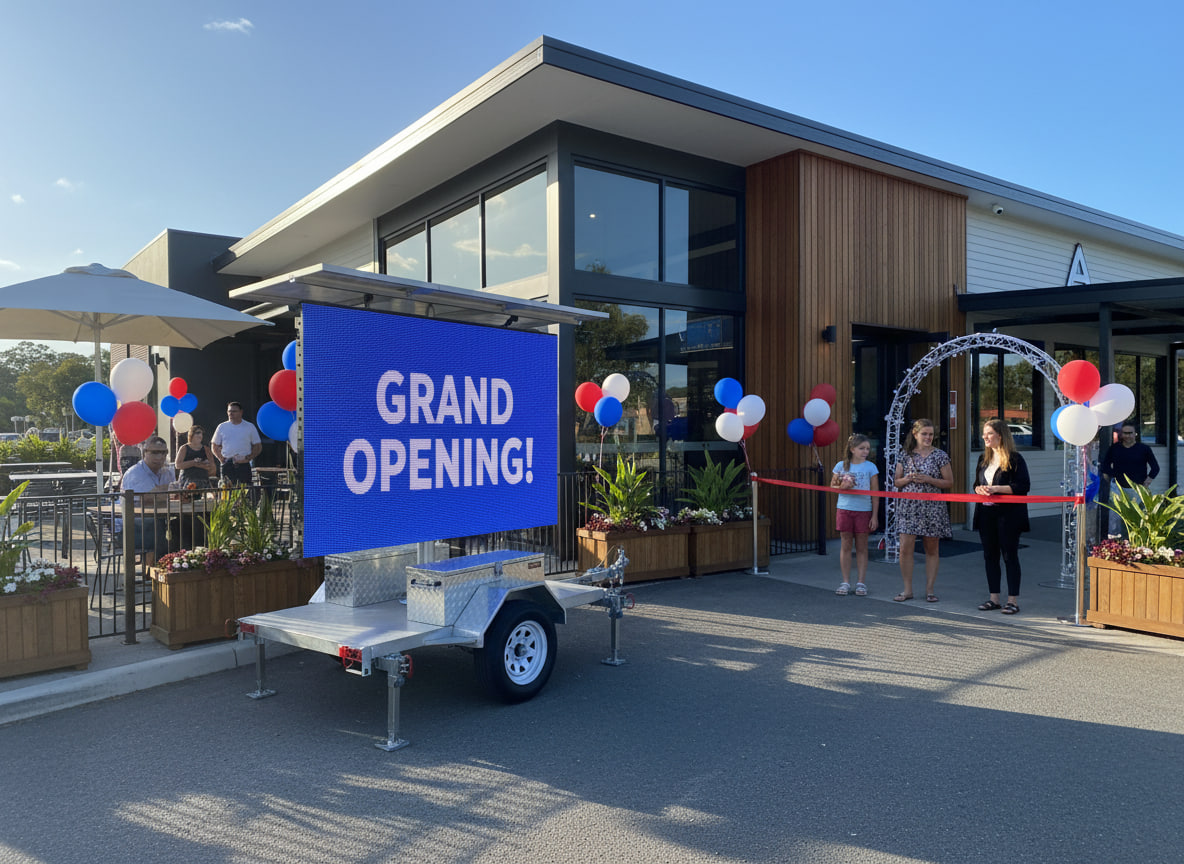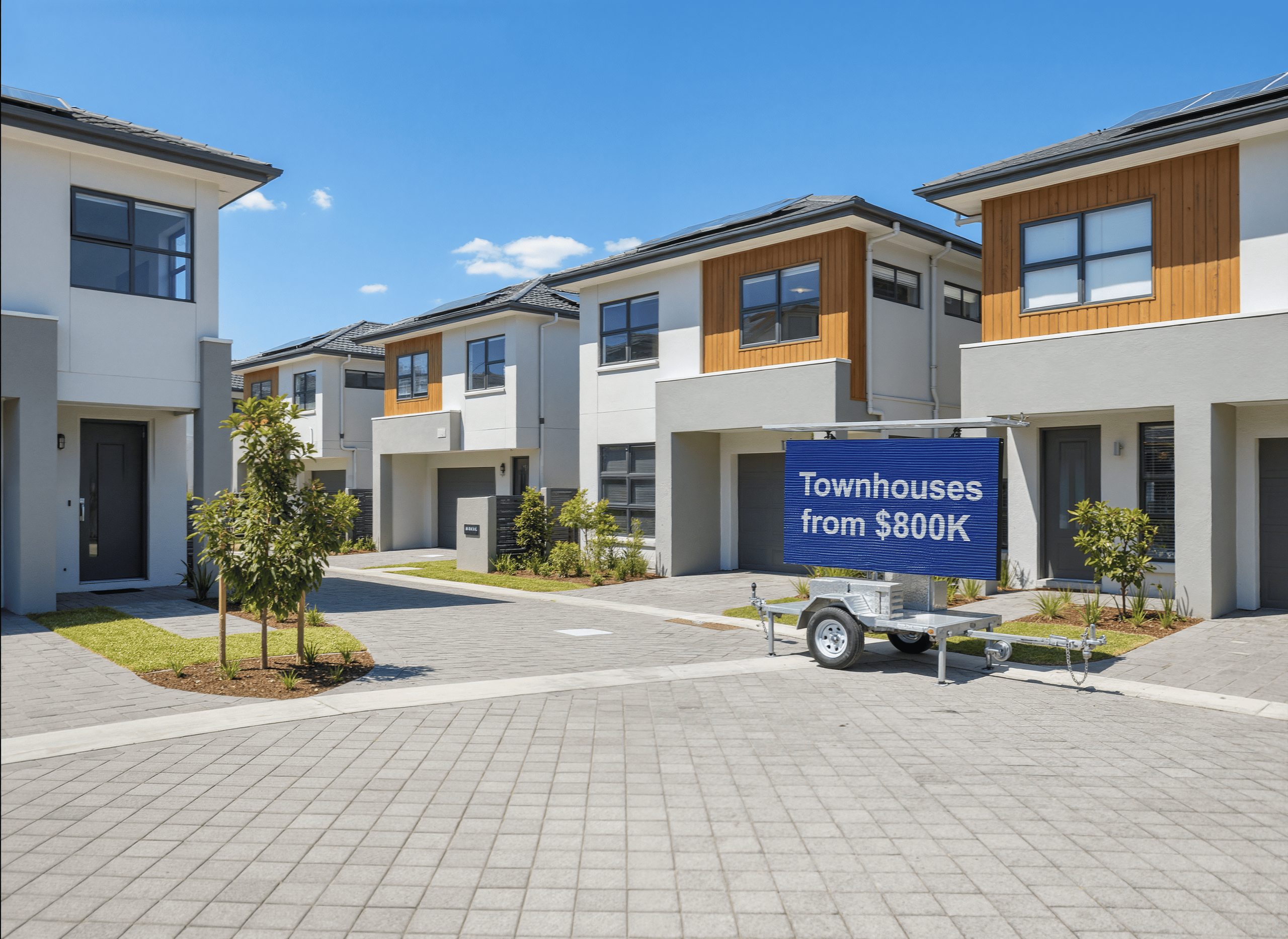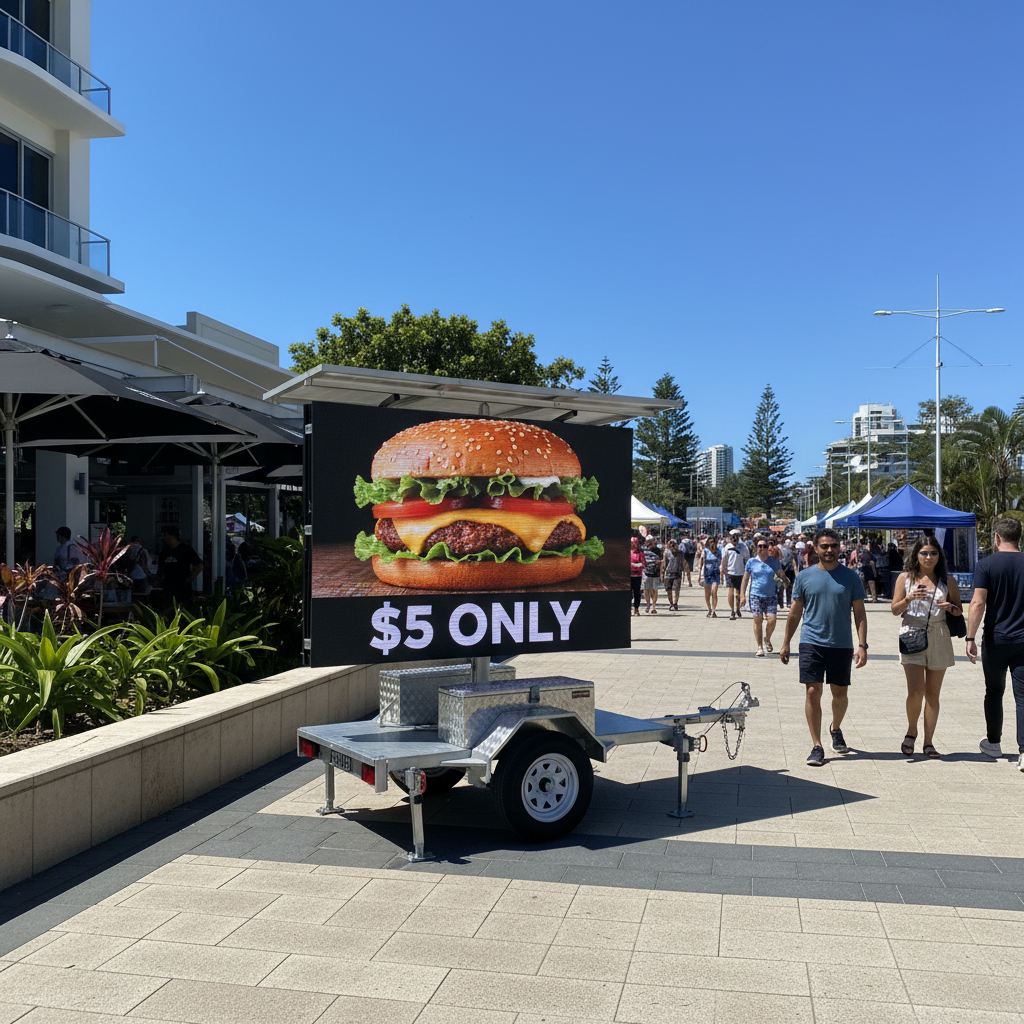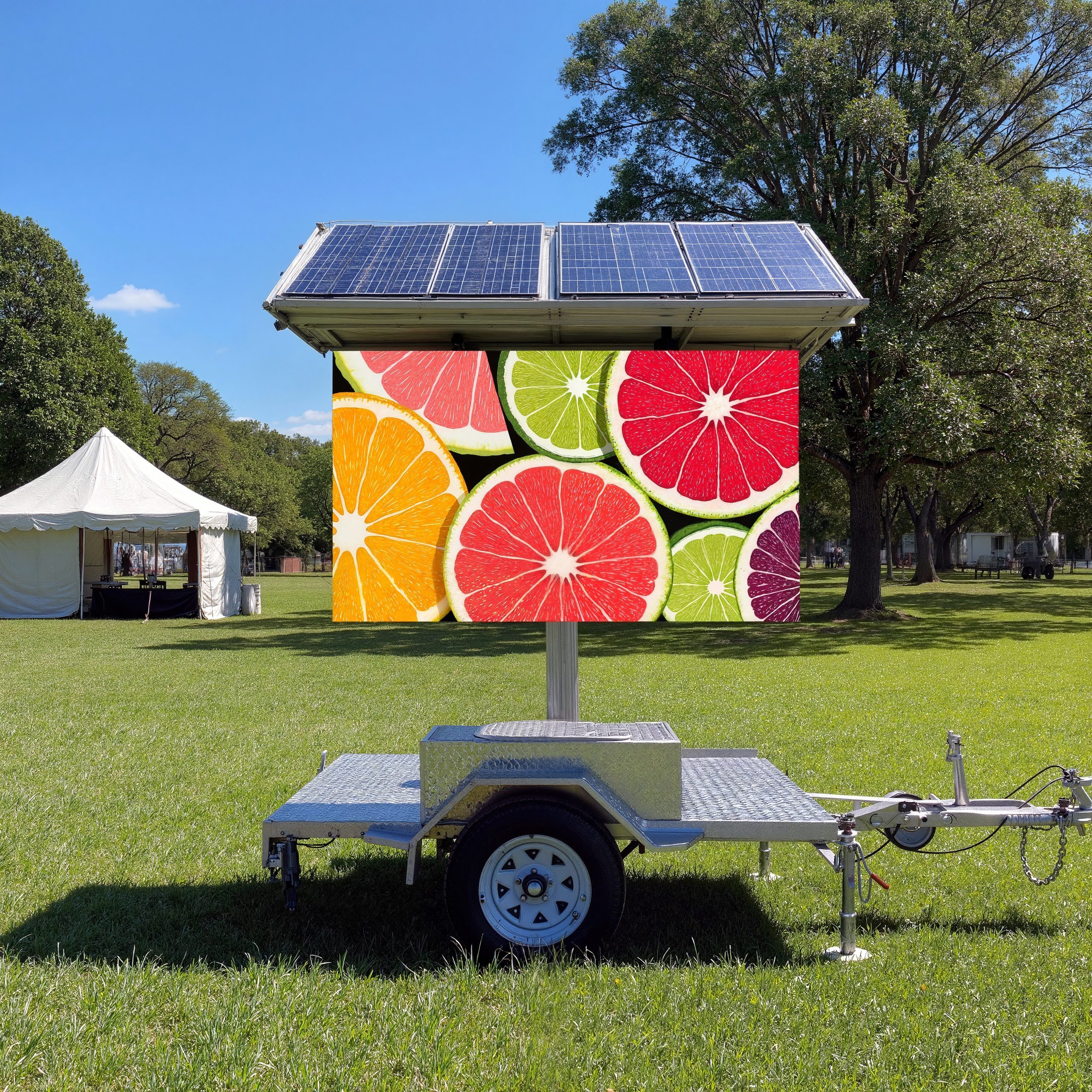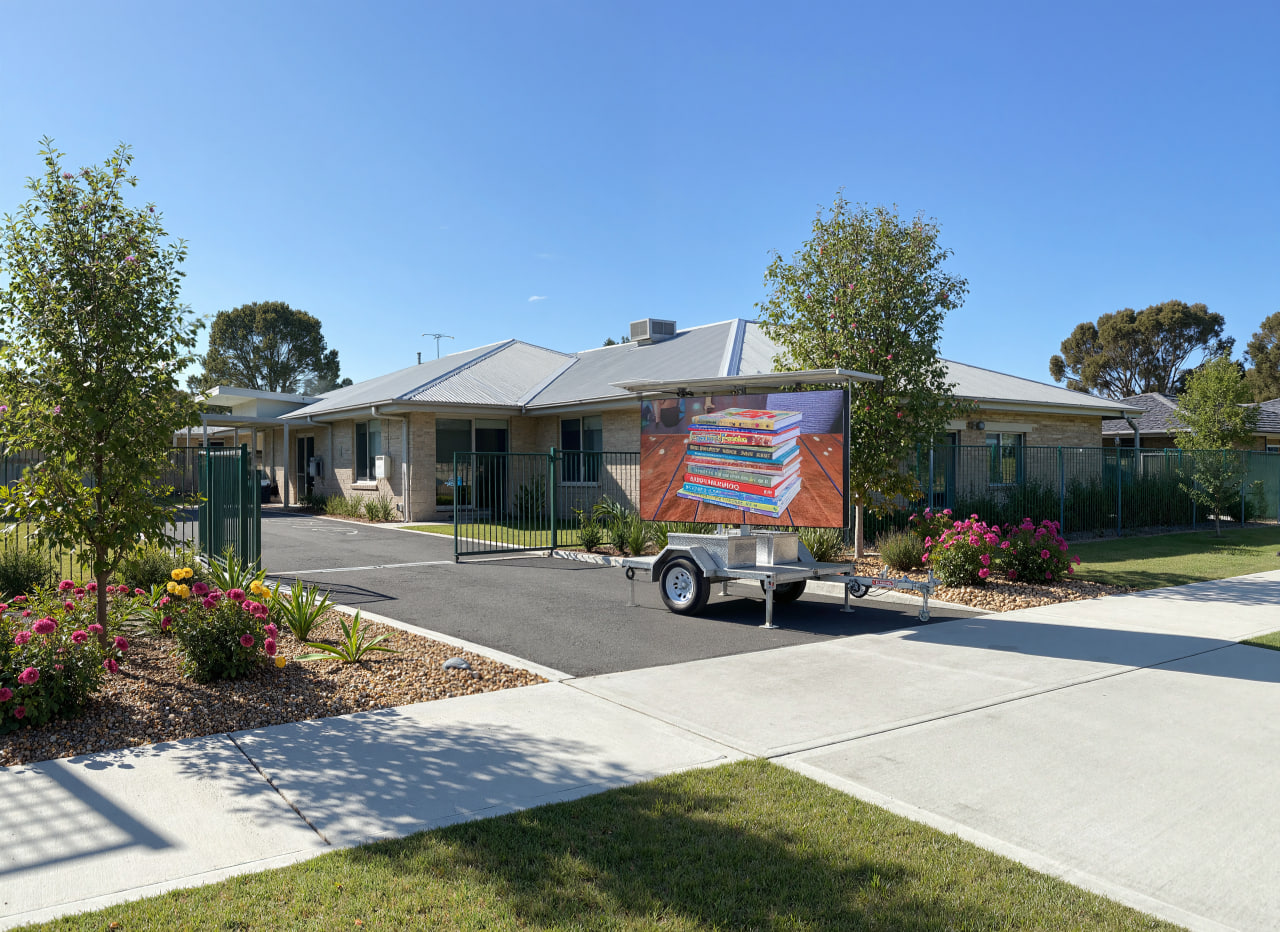
When it comes to outdoor advertising, location is everything. At Signs of Success, we know that even the brightest, most dynamic LED trailer can only do its job if it’s parked in the right spot. Our solar-powered mobile LED billboards boast up to a 97% ad recall rate – people remember what they see – but only if they can see it clearly. That means choosing placement spots with clear sightlines, ample traffic or pedestrian dwell time, and minimal obstructions. In this guide, we’ll walk through key placement factors (visibility, speed, dwell time, crowd flow, etc.) and give you a simple safety/site checklist (permissions, lighting, security, weather). We’ll also point out common missteps (signs that miss the mark) and explain how our Gold Coast-based team at Signs of Success can help you find that perfect, high-impact spot for your LED trailer.
Signs of Success has been helping Gold Coast businesses shine for over 50 years, and our mobile LED trailers are designed to “turn heads”. Because they run on solar power with battery backup, they keep your message glowing “day and night” even without external power. This flexibility means we can literally put our sign wherever it makes the most sense – from busy highway corners to city footpaths, and even remote event fields. However, to make the most of this power, you must park it strategically. In short, smart placement makes or breaks a campaign. A trailer parked off in the distance or hidden behind bushes will generate little buzz; the same trailer parked at a busy intersection or storefront entrance can deliver hundreds of thousands of impressions.
Key Placement Factors for Mobile LED Signs
To maximize impact, pick places where drivers and pedestrians naturally see and stop to look. The main factors to consider are sightlines, approach speed, dwell time, pedestrian flow, and orientation. Below we outline each one, with real-world tips and references:
-
Clear Sightlines & Visibility: Your sign must be seen. It should not be blocked by landscaping, utility poles, walls or larger signs. In fact, sign regulations advise verifying that the trailer “won’t obstruct traffic sightlines or create hazards”. Likewise, signage experts emphasize that visibility can be “impaired by…trees, landscaping, buildings, telephone poles, […] other signs,” so proper planning and placement are key. Always park the trailer in a spot where its LED screen has a direct line of sight to oncoming traffic or footpaths. For example, avoid tucking it behind a hedge or too close to a corner where a street tree might block the view. Instead, pull it a bit forward – even a few extra metres closer to the curb – to stay out of shadows and ensure clear visibility.
-
Height & Approach Speed: The height of your sign relative to the road or footpath is crucial. Drivers move fast and have a narrow field of view, so their eye level is generally higher and fixed straight ahead. Sign specialists recommend that for vehicular traffic, the bottom of the sign face be about 6–10 metres above road level. This elevation lets oncoming motorists see the display comfortably above the rooflines of cars and smaller obstacles. (In practice, our trailer’s display is mounted on a trailer mast; be mindful to extend it high enough so it isn’t lost behind taller vehicles or roadside clutter.) On the other hand, pedestrian traffic moves slower, giving people more time to look around. For walkers, the optimal reading zone is much lower – roughly 1.5–2.5 metres off the ground. This aligns with the average eye line, so passersby can read your sign without tilting their heads. In short, adjust your trailer mast height depending on your audience: taller for cars at highway speeds, lower for foot traffic in plazas or markets.
-
Angle & Orientation: How the sign faces approaching viewers can make a big difference. If you’re parked against a building or on a footpath, consider perpendicular placement: jutting the LED face out toward the street or sidewalk. Studies show perpendicular or forward-angled signs are much more visible to both drivers and pedestrians from a distance. A sign mounted flat along a wall might only be readable at the last minute. Similarly, avoid angling the screen away from the main flow of traffic. Wherever you park, try to align the sign so that people naturally turn their attention to it – for example, on an open corner facing an approaching car, or facing a crosswalk where pedestrians pause. Also be mindful of glare. Never face the screen straight into the rising or setting sun. If possible, shift the trailer slightly so its brightest side doesn’t catch strong direct sunlight, which can wash out the display. (Our Signs of Success signs have ambient light sensors to auto-adjust brightness, but good placement avoids having the sun behind the sign during busy hours.)
-
Dwell Time (Queues & Stops): High-traffic speed is good for visibility, but people still need time to read your message. Ideally, park where viewers slow down or stop. Traffic lights, tollbooths, drive-through windows, school drop-off lines – these are all spots where vehicles pause long enough for the messaging to sink in. Research confirms this: one billboard strategy guide notes “extended viewing time due to traffic patterns” when a board is placed where vehicles naturally slow. On the Gold Coast, that could mean a red light at the corner of Harbour Town or Pacific Motorway exit queues near M1. Even in pedestrian contexts, lines form at cafe counters, ferry terminals, or theme-park ticket booths. Putting your trailer where people stand still (rather than at high-speed bypasses) increases the chance they’ll remember your message.
-
Pedestrian Crowds: For foot traffic, think like a pedestrian. Signs should hit people at eye level and at their decision points. Wayfinding guides advise placing signs at “choke points where foot traffic is likely to congregate,” such as building lobbies, transit stops, and mid-block plazas. On the Gold Coast, that might be outside busy shopping centres (like Pacific Fair or Robina Town Centre entrances), transit hubs (Robina train station), or event venues (Hall of Fame Casino, Gold Coast Turf Club). If there’s an afternoon rush at a local mall, park your trailer near the main entrance facing the flow of shoppers. If surfers leave a beach carpark mid-morning, park the sign where they’ll see it as they walk to the boardwalk. The key is to capture the crowd where they’re most attentive, not when they’re dashing by.
-
Natural Entry & Attraction Points: Think about where your target audience’s journey begins. For example, many businesses find success parking an LED trailer right in front of their own entrance, on the property forecourt, or by a driveway gate. Signs of Success often recommends placing the trailer directly outside open homes or car lots – classic examples of “entry point” marketing. Real estate agents will literally place our sign on the lawn of an open house so every passing neighbour takes notice. Similarly, car dealerships commonly park trailers out front during big sales. Outside retail stores, a sign at the forecourt can pull in customers from the road. Even at festivals or markets, positioning the trailer at the front gate or along queue lines (e.g. ticketing or food stall lines) makes it a natural “first thing visitors see.” In general, the closer you place the sign to the actual point of action, the better – because people will already be slowing down or stopping right there.
-
Peak Flow Timing: Don’t forget to match location with timing. A spot might be full of people at one time of day but empty at another. Before deciding, do some site visits at different times. One advertising case study recommends checking potential sites during the morning rush, lunchtime, evening peak, and even weekends. For instance, a strip mall might be packed at 12pm but deserted late at night. A night market has no crowd until sunset. Knowing the temporal flow ensures you park your sign when people are actually there. The xpark360 billboard guide suggests surveying at “morning rush (7-9:30am), lunch (12-2pm), evening rush (4-7pm) and Saturdays”. Follow similar logic: on the Coast, test in summer vs winter too. A Gold Coast beachfront promenade is busy year-round but might have different weekday/weekend peaks than suburban streets.
By combining all these factors, you can craft an outdoor advertising location strategy that maximises attention. Keep in mind, a single sign can’t be everywhere at once – so pick the spot where your target audience is most likely to notice it. For example, if you’re promoting a Sunday market in Surfers Paradise, an obvious choice is to park along the main road a few hours before noon when the crowd starts trickling in. If you’re a café owner, perhaps a sign outside a nearby office building lobby at lunchtime would catch workers. And remember: sometimes a slight shift in parking position (a few extra metres forward, a better angle) can mean the difference between being seen and being overlooked. In short, park smart.
Common Placement Pitfalls (What to Avoid)
Just as important as choosing good spots is avoiding bad ones. Here are some classic placement mistakes – essentially the flip side of the above tips – so you can ensure your LED sign isn’t wasting its potential:
-
Hidden or Overgrown: Never park where plants, trees or fixtures can later grow to obscure your sign. A previously open forecourt can quickly become invisible if a new tree or billboard is installed. As one signage manual warns, even “trees grow and obscure signs”. If a sign is hidden by landscaping, it defeats its purpose entirely. Before finalizing a location, walk around and look from all approaches – verify there are no branches or shrubs that will block the view. Even if it’s clear now, consider maintenance: will landscaping crews trim branches regularly, or let them encroach on your view? If uncertain, choose another spot.
-
Too Low or Too High: Height is a double-edged sword. A sign placed too low (near ground level) can easily be blocked by parked cars, fences, or even crowds. An electronics or retail sign that should be visible over cars will be useless if it sits at car-window height. Conversely, a sign set too high can be unreadable to pedestrians and wasteful for drivers (who may have to tilt their view up at an uncomfortable angle). A study on sign errors notes that improperly high signs become “hard to read, reducing effectiveness,” and similarly, too-low signs risk being obscured. In practice, test by standing or driving towards the trailer: can you read the message in time without craning your neck? Adjust accordingly.
-
Off the Decision Point: Avoid parking too far back from where people make decisions. For example, a discount sign placed 100 metres before a store entrance might be too distant to register, whereas one right at the driveway would catch them. If your trailer is behind other signs or buildings, move it forward to the “decision zone.” Also, don’t hide your sign in a seldom-used lane. A common mistake is parking on a backstreet instead of the main road. If most of your potential customers pass on the main thoroughfare, the trailer needs to face that road, not a quiet back access.
-
Sign Competition and Clutter: Placing your trailer among many other bright ads or corporate billboards can actually lessen its impact. Eye-catching LED trailers are awesome on their own, but if there’s already a huge flashing scoreboard next to it, yours might not stand out. We advise scouting your intended spot for ad clutter – too many competing messages in a small area can overwhelm drivers. For example, if multiple food outlets or shops already have large signs, our trailer could blend into the visual “noise.” In such cases, try a less saturated corner or ensure our sign is at least visually distinct in orientation or content.
-
Low Traffic or Wrong Audience: This might seem obvious, but ensure your chosen location actually sees the traffic you want, at the right time. For instance, parking at a beach on a weekday afternoon when everyone’s at work yields few impressions. Similarly, a sign near a school may see kids but your message might target local parents – maybe fine. But a daytime sign in an office park might miss tourists who only wander there on weekends. Always align the sign’s location with where your key audience travels and when. If a spot has seasonally low traffic (e.g., a ski field billboard in summer), consider another seasonal alternative.
-
Weather and Safety Hazards: Finally, never ignore practical safety. An LED trailer should be on firm, level ground, not soft sand or a steep slope where it could tip. Avoid flood-prone zones. For example, parking in a low-lying carpark before a rainy season could risk water damage. Also, be aware of overhead hazards: wires, low bridges, or tree limbs at roof height. Though our trailers retract masts and fold down during travel, once up they’re tall – keep them clear of low obstacles. Ensuring good footing and clearance is part of safety.
By steering clear of these pitfalls – overgrowth, wrong height, clutter, etc. – you keep your campaign working its hardest. One satisfied client put it simply: “we can park it right where people are already headed” – and for every wrong spot, there’s likely a better adjacent one.
Site Readiness Checklist: Permission & Safety Considerations
Once you’ve identified a promising location, run through a quick site checklist before parking:
-
Obtain Permission: Always get approval from the landowner or authority. If you’re parking on private property (e.g. a shop forecourt, car park, showground), secure written consent from the owner or manager. In Gold Coast councils like Brisbane’s, any sign on someone else’s land requires a landowner’s consent form. Likewise, if on public land or roadside, check with the local council or state road authority. Mobile billboards may be classified as “stationary advertising devices” in some zones and need permits. As industry guidelines note, a stationary mobile billboard “may be subject to stricter regulations or additional permits” compared to a moving vehicle sign. For instance, local law might forbid parking within 10 metres of an intersection or require an advertising permit. Contact your local council to confirm rules; the worst outcome is a fine or removal after you’ve set up. Remember, better to have permission in hand than to have your sign towed.
-
Lighting & Power: Though Signs of Success trailers are solar-powered, consider the site’s lighting conditions. If the location is meant to operate after dusk, check for nearby streetlights or the need to rely on the trailer’s own lighting. Our signs adjust brightness automatically to ambient light, but very dark parking lots can reduce perceived visibility. Ensure the sign will still stand out at night. Conversely, if parking during daylight, confirm that the sun angle (especially in mornings or late afternoons) isn’t directly hitting the LED panel. If possible, place the sign where the ambient light contrasts (e.g., side streets rather than glowing morning horizons).
-
Security: Choose a spot that’s reasonably safe overnight. An isolated alley or poorly lit lot may invite vandalism or theft attempts. It’s best if the location is near the business or event you’re promoting (so someone is around), or near CCTV/camera coverage if available. When leaving the trailer overnight, make sure it is locked and/or chained if needed (check with local laws). Signs of Success includes lockable supports, but still avoid places known for vehicle break-ins. If in doubt, consider a nearby locked compound.
-
Weather Exposure: Queensland weather can be unpredictable. Before parking, ask: Will this spot be exposed to strong coastal winds? Could heavy rain flood the area? Avoid open fields without windbreaks in gale conditions, or unlevel sites that could allow a sudden downpour to float the trailer. In high wind warnings, we typically pull the mast down or relocate the trailer. If your site is on grass, be cautious of soft ground after rain. Always use wheel chocks and stabilisers when deployed. In brief, ensure the chosen spot won’t damage the sign or endanger others during bad weather.
-
Site Space & Access: Make sure there’s enough room to deploy the trailer fully and let vehicles pass safely. A good rule is to leave at least 1.2–1.5m of clear sidewalk around a parked sign for pedestrians. Also check for overhead clearance on approach (low branches, awnings). The parking space should allow the trailer to sit stably without part of it hanging into traffic lanes. If in a congested car park, ensure you’re not blocking drive aisles or emergency access ways.
Completing this checklist up front saves headaches later. For example, Brisbane’s council rules explicitly require you to “provide the landowner’s consent” with any sign application if you don’t own the property. We handle such paperwork for you, but it’s good to verify.
Signs of Success: We Can Help You Find the Perfect Spot
At Signs of Success, we don’t just drop off a trailer and drive away – we partner with you to maximise your campaign’s success. Drawing on our local expertise, we can help scout and recommend ideal placements tailored to your Gold Coast audience. For instance, we often advise:
-
Real Estate Open Homes: Park the trailer at the entrance to the property or on the street corner leading to it. As our site notes, a dynamic LED sign can make “open homes … impossible to miss”. We’ll work with you on signage that points buyers right to your listing.
-
Dealership Forecourts: Our clients in auto sales use the trailer right in front of showrooms, where foot traffic from passing buyers is highest. Again, the advice is right “out front” of your event.
-
Festivals and Markets: Count on us to set the trailer at key entry points, parking areas or along queue lines – exactly where festival-goers or shoppers gather. It’s the same logic we apply to every location.
When you contact Signs of Success, we can arrange a site survey or simply discuss the best strategic location. Our team knows which Gold Coast council rules apply, and we can handle permit advice so you’re compliant and confident. We’ll also help with content: a bright, clear message matched to your location (for example, “OceanFest Concert: THIS WAY!” with an arrow, etc.).
To get started, contact Signs of Success today. Our friendly local team is ready to advise on mobile LED placement, help you choose a safe high-visibility spot, and ensure you have all the permissions covered. Let us turn your next campaign into a Gold Coast landmark: your own trailer billboard, parked and working where it matters most.
Call us for a free quote or consultation – together, we’ll find the sign of success for your business.