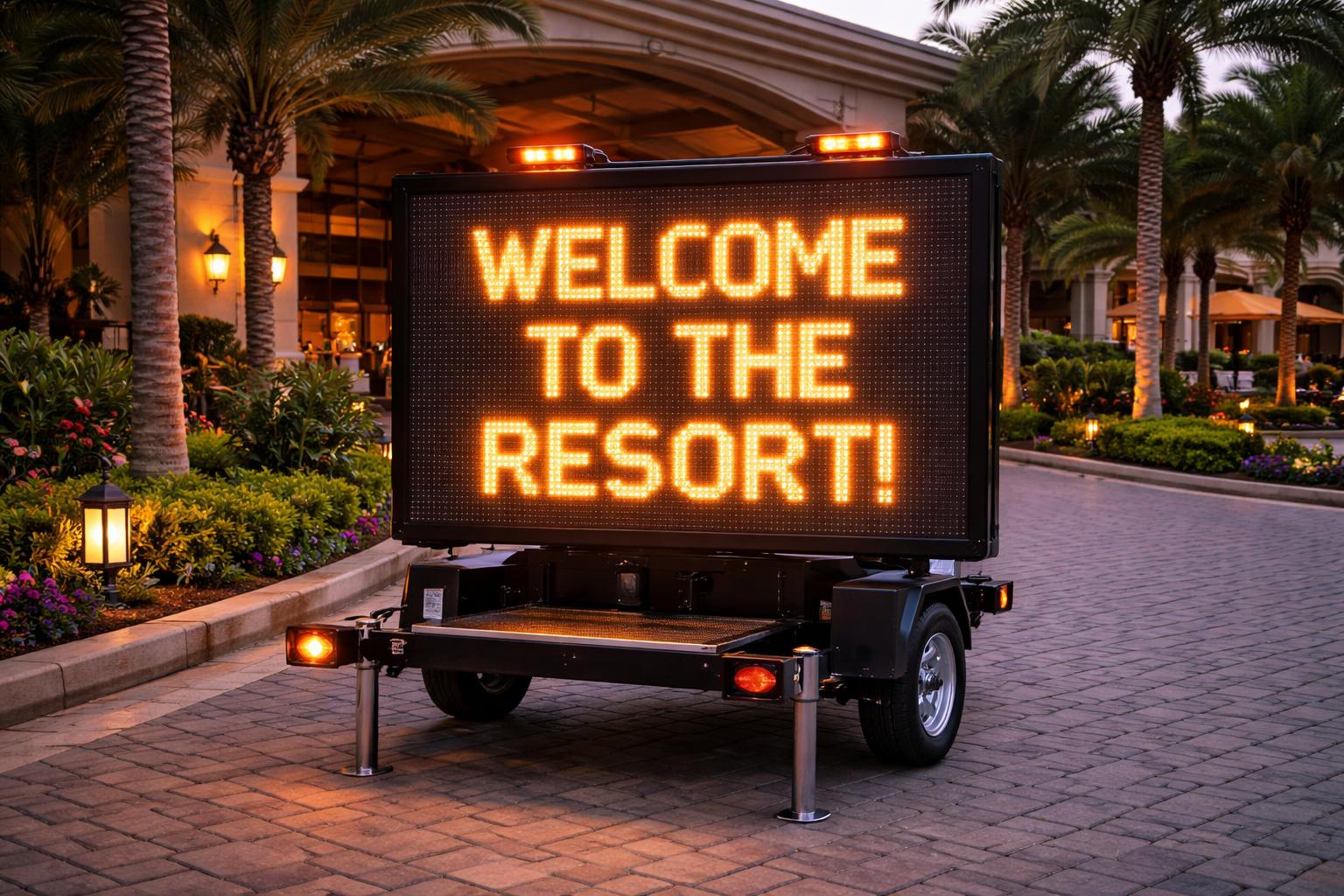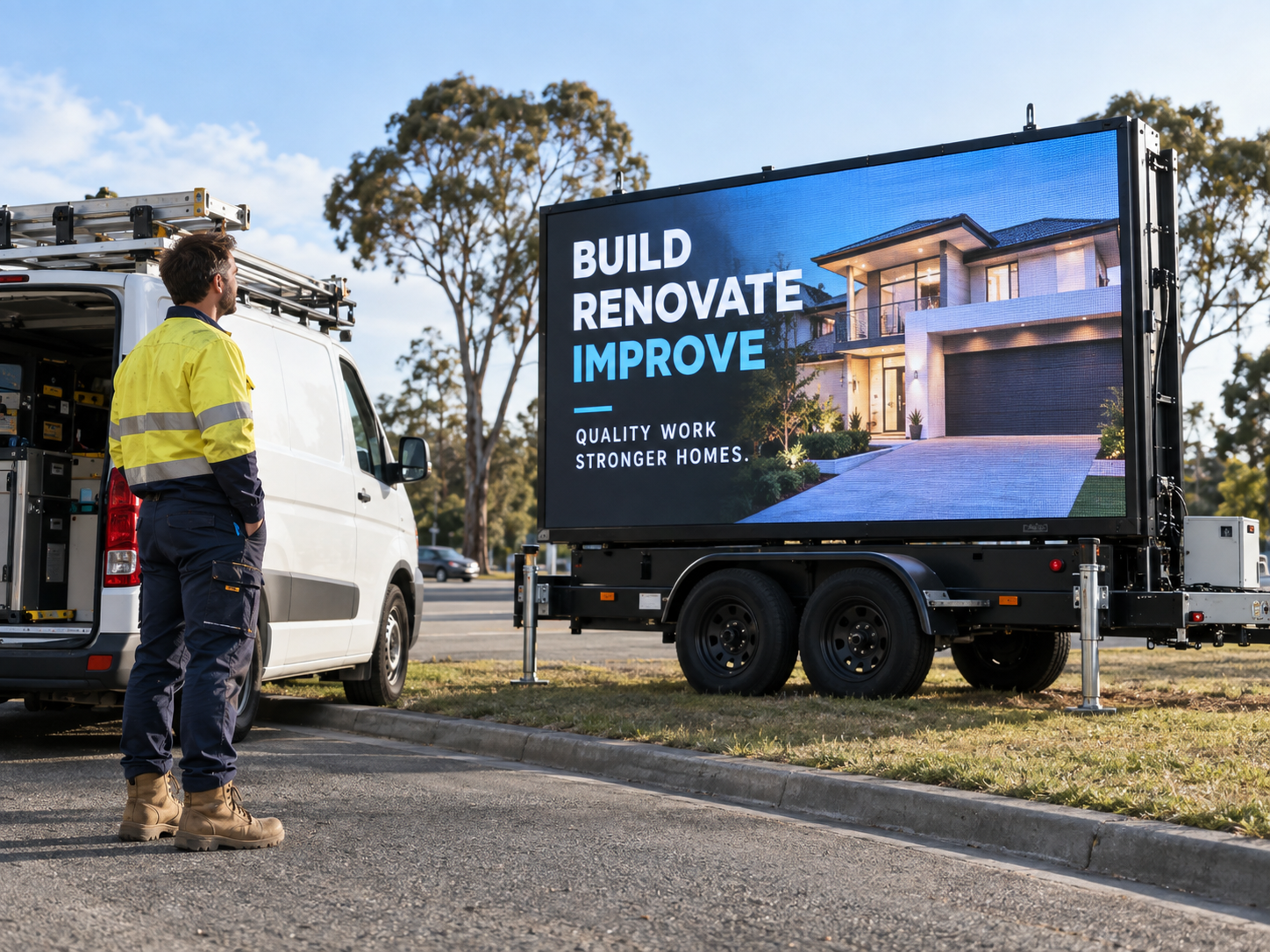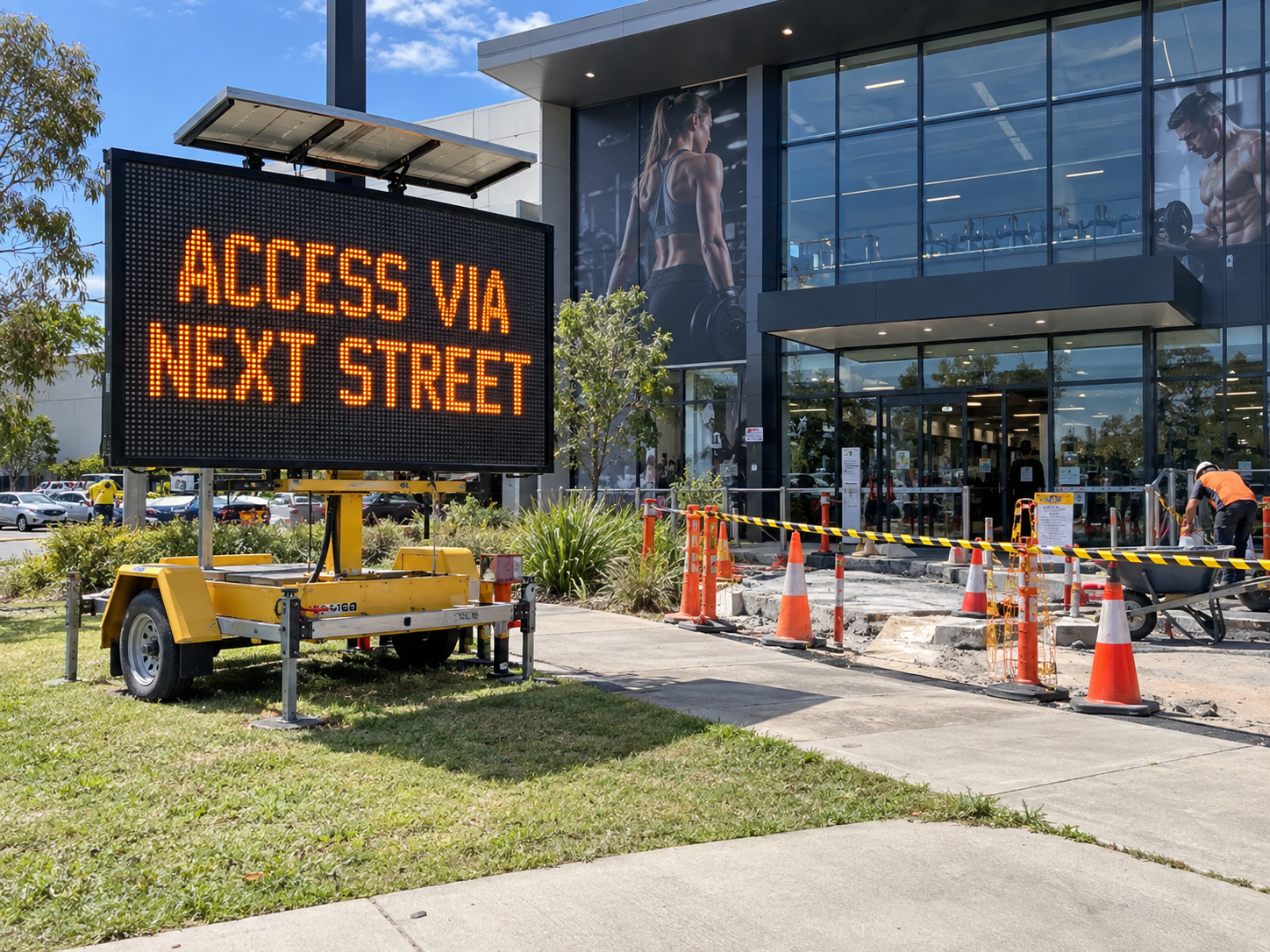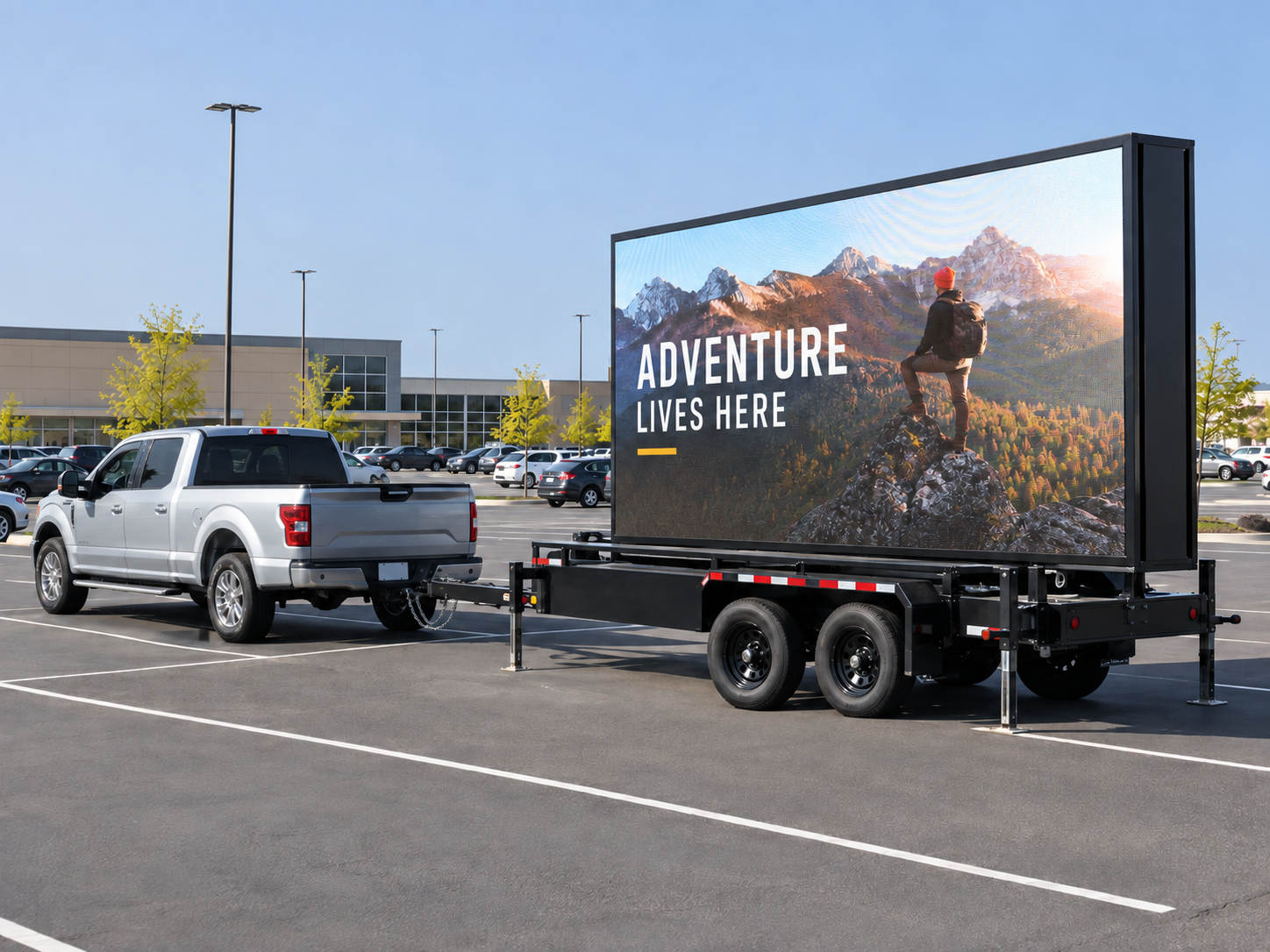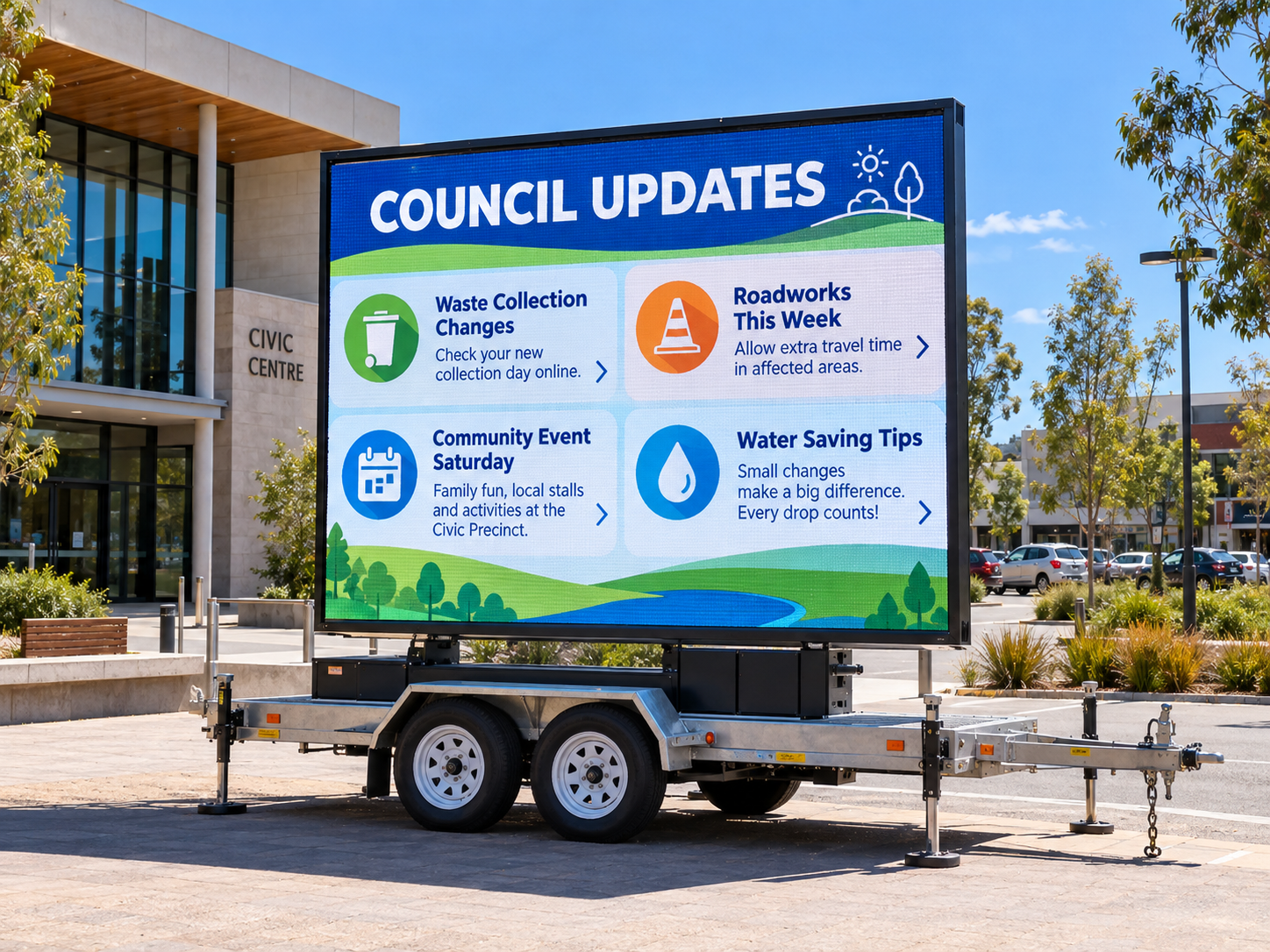
Councils and community organisations have a wealth of information to share – event dates, roadworks schedules, public safety messages, library programs and more. Yet many residents simply drive by without seeing static posters or poorly-placed banners. A mobile electronic sign (sometimes called a mobile digital billboard or portable LED billboard) offers a bright, dynamic way to deliver timely messages. These trailer-mounted screens can be towed to any permitted location, and Signs of Success’s units are solar-powered and remotely updated, so they can operate 24/7 wherever they are placed. That means a council can broadcast a notice or alert right outside a facility or along a detour route when people need to see it most. Unlike fixed roadside billboards, a mobile sign comes to the message, not the other way around.
Important distinctions must be made: variable message signs (VMS) – typically amber-text portable boards used for traffic management – are different from full-colour LED billboards which display complex graphics and animations. We will explain when each type is suitable. We’ll also cover permitting and placement: for example, Brisbane City Council classifies “high-impact electronic display signs” (like LED billboards) as prohibited devices in certain locations without special approval. In practice, Signs of Success helps clients navigate local regulations (and often places screens on private land or council-approved event sites to avoid on-street restrictions). Finally, we’ll offer creative tips (drawing on industry design rules) and examples of content scheduling, along with metrics and case-study scenarios to measure success.
Mobile LED Billboard vs Portable VMS: Key Differences
Full-Colour LED Billboard (Mobile Electronic Billboard): These trailers have large high-resolution screens (for example, 2m x 1m or larger) that can show colour graphics, photos and even video. They are essentially mini-digital billboards, perfect for eye-catching public service messages or promotions. Because they display any design, councils or community groups can use them for branding, pictorial notices (like maps or charts), and multi-language or illustrated warnings. Signs of Success’s units deliver very bright, high-contrast images day and night. They also support remote updates and dayparting (changing messages by time of day). The downside is they count as “high-impact electronic displays” under many local laws and often need a permit if sited on public roads.
Portable Variable Message Sign (Amber VMS): These are the familiar amber-on-black digital road signs seen around construction or traffic incidents. They typically display simple text and symbols (arrows, icons) only, without colour or photos. Portable VMS are strictly intended for traffic control and safety information. For example, they might show “ROADWORKS AHEAD – USE DETOUR” or countdown timers. Because they use standard traffic templates, councils often own or lease these units for their work crews. Importantly, regulations (e.g. Transport for NSW standards and local rules) generally forbid using VMS for non-traffic advertising or community events. Attempting to use a VMS for general community announcements (like promoting a festival or sale) would contravene guidelines, since its prime role is road safety.
Decision Criteria:
- Use a VMS if the message is strictly traffic-management (e.g. detours, road closures, temporary speed limits). A VMS conforms to road safety rules and can be placed on roadsides with the right permits.
- Use a mobile LED billboard if the message is broader public info, promotions or awareness (e.g. “Council meeting tonight”, “Holiday register now”). These can attract attention and present rich content, but they must be sited carefully (usually off the road or with permission).
Appropriate Uses for Councils and Community Groups
Mobile electronic signs can serve many public-sector communication needs. Here are several key scenarios where they shine:
-
Community Consultation Notices: When a council holds a public meeting or information session, a sign can build awareness and attendance. For example:
- Roadworks or Planning Consultation: “Townhall tonight: Main Street Works – Community Input, 6pm at Civic Hall”.
- Development Proposals: “Have Your Say: Redevelopment Meeting Thurs 5pm – All Welcome”.
By placing a sign at the nearest busy intersection or at the entrance to a construction zone, residents are informed of the date and purpose of consultations. Messages can alternate key details or use icons (e.g. a council logo or meeting icon). A rotating schedule might show dates in the morning, reminders at midday, and “Last Call” in the evening.
-
Temporary Facility Changes or Traffic Updates: Whenever a community facility changes its entry or roads get detoured, a mobile sign provides directional guidance. Examples:
- Road/Footpath Closures: “Detour Ahead – Turn Right on Beach Avenue” with an arrow.
- Building Access Changes: “Library Rear Entrance – Use Temporary Ramp”.
- Event Parking: “Free Parking Here for [Event Name]” with directional arrow.
Because Signs of Success trailers are solar-powered and wireless, they can be placed even in remote or setup-challenged areas. Councils should ensure that these messages are simply worded and mainly instructional; flashy animations or long sentences are avoided to keep drivers’ attention on the road.
-
Council Events Promotion: From local fairs to festivals and awareness weeks, councils run many events needing publicity. A mobile LED sign can:
- Highlight event times/locations (“Summer Movie Night – Sat 7pm at Riverside Park” with a film icon).
- Recognize sponsors or partners between event segments.
- Display live updates during the event (e.g. “Next performance in 10 min”, or “Show Cancelled due to Weather”).
For example, a sign placed at the gate of a community concert might show sponsor logos in the afternoon, then countdown “Show starts in 30 minutes” as evening approaches. This on-site messaging keeps attendees informed and engaged. For roadshows or traveling programs (e.g. museum exhibitions moving between halls), the sign can move with the event, maintaining continuity of communication.
-
Waste Management and Recycling Campaigns: Councils frequently run seasonal clean-up drives or recycling awareness. A mobile sign can draw attention to drop-off days or remind people about new bins:
- “Recycling Day – Free E-Waste Drop-Off Sat 9am-1pm @ Civic Centre”.
- “Bins Change Today – See Council Newsletter Online for Schedule”.
Placed at high-traffic nodes near residential areas, such signage can significantly boost participation. Because many residents might tune out a static poster, the dynamic sign (perhaps with a recycling symbol animation or changing messages like “Now Accepting TVs & Computers”, then “Next Drop: Locations”) can increase message recall. As Services page notes, colourful digital screens can attract attention far better than static signs – studies even suggest digital ads can double impact over traditional billboards. For councils, this means community notices get seen more often.
-
Program and Registration Notices: Community clubs, libraries, sports associations and schools often need to advertise sign-ups or deadlines (e.g. “Soccer Club Registration Open until 15 Sep”). A sign outside a sporting field or near a school can continuously loop key details, and be updated (for example, counting down the last days of registration). Sample copy might be:
- Morning: “Join Morning Yoga! Register at Park Pavilion”
- Afternoon: “After-school Science Club – Spots Left!”
- Evening: “Register by Friday for SAT coaching – Call 1234”
By dayparting messages, organisers ensure different audiences (parents in the afternoon, students after school, adults in morning) see the relevant info. Including a short web link or QR code (see Messaging Tips below) can let interested people immediately sign up or learn more.
-
Public Safety and Awareness: During emergencies or public health campaigns, councils need to broadcast alerts quickly. A mobile electronic sign could display:
- “Heatwave Alert – Stay Hydrated! Cooling Centre Open 9am-5pm”.
- “Bushfire Watch – Evacuation Centre Set Up at [Location]”.
- “COVID-19 Vaccine Clinic Today – Drive-Through Carpark”.
Because messages can be updated instantly (even hourly), the sign provides a way to adapt to changing conditions. For example, one screen might warn of “Flooding possible Thursday” in the morning, then switch to “Flood Watch Active – Evacuate Now” as situations escalate. VMS equipment is typically used by state road authorities for genuine emergencies, but a council sign can complement this by reaching local roads that state signage misses.
At all times, Signs of Success advises keeping messages simple (see Messaging section) and having a clear call-to-action or location for next steps. Importantly, whether you’re promoting an upcoming town hall or guiding traffic around a wetland cleanup, the sign’s content should focus on one main idea per slide. This clarity ensures high recall: viewers typically have only a few seconds per slide to absorb the message.
Placement, Permitting and Safety Guidelines
Before deploying a mobile sign, councils and groups must address location and legal considerations. In Queensland (as in most jurisdictions), any sign placed on public land or roads may require local government approval. For example, Brisbane’s Advertising Devices Local Law 2021 explicitly lists “high-impact electronic display signs (such as LED billboards)” among devices that are generally prohibited except in certain designated areas. In practice, this means a council should:
-
Check the Site: Avoid placing the trailer in “no signage” zones like dense residential streets, near intersections (which could obstruct sight lines), or heritage precincts without approval. Instead, look for council-owned event spaces, public carparks, or designated sign sites. Outside libraries, recreation centres or town halls are often ideal if accessible to drive the trailer. If the sign must be on the roadside (e.g. at a roadworks site), it may have to be treated as traffic control equipment (a portable VMS, with an approved work zone setup).
-
Obtain Permits if Needed: If the intended use is more advertising/informational than purely traffic, the council will likely need to classify it as an “information sign” or “temporary event sign” under local law. For instance, Brisbane allows small non-commercial info signs (≤2m²) without formal approval, but a large LED billboard trailer will exceed that. Signs of Success typically works with council officers or event organisers to lodge the necessary applications and compliance documents, and to ensure the trailer meets technical standards (e.g. height clearances, electrical safety). Even in Gold Coast and Brisbane, common-sense rules apply: the sign must not distract drivers with flashing lights or block pedestrian pathways.
-
Safety Placement: Always position the trailer to minimise hazards. It should be on level ground, visible to traffic without obstructing them, and if on a road shoulder, within required clearance from the carriageway. In a council context, the road authority may require the unit to be behind barriers or cones, especially if workers are nearby. The sign’s orientation matters too – often angled slightly toward oncoming traffic for maximum exposure. As noted in Signs of Success’s setup guide, a sign facing the wrong direction can halve its effectiveness (e.g. it should face the main flow of vehicles, not the outbound side).
-
Operating Hours: Consider curfew rules. Even if a sign is permitted on site, many councils restrict operating hours or brightness at night. If displaying on public roads, it should dim at night or turn off after certain hours to avoid glare. Signs of Success units are very bright (suitable for daylight viewing) and have auto-dim features. For community events, the sign can run longer (even overnight at festivity gates), but again only with permission.
By coordinating with council or venue managers, a community group can often classify the sign as part of an approved event infrastructure. For example, the sign might go up on the day of a festival with the traffic plan for that event, avoiding the usual “advertising” category.
In short, always plan ahead: check local laws (the interactive guides of Brisbane or Gold Coast Council help identify sign types), and rely on Signs of Success to handle approvals. This frees the organisation to focus on the message itself.
Messaging Best Practices
A mobile sign’s power comes from grabbing attention, but that attention lasts only moments. Studies show drivers see a roadside message for barely 3–10 seconds, so content must be instantly understandable. Here are key tips (many align with the Signs of Success design guidelines):
-
Keep it Short and Clear: Aim for one main message per slide, with very few words. Industry experts advise no more than 7–10 words or roughly 10–12 characters across per slide. In practice at Signs of Success, a headline of 3–5 words per line (3 lines max) is ideal. For example:
- “Council Meeting 6pm – All Welcome” (3 words + date/time)
- “Free Recycling Day – Sat 9am
- “Library Summer Camp! Register Now”
Long sentences, URLs or tiny text should be avoided. If more info is needed, use a QR code or refer to a short domain (e.g. “Visit city.qld.gov/park”). Remember: “Say it in less”.
-
High Contrast and Readable Fonts: Use large, plain sans-serif text (Arial, Helvetica, etc.). The rule of thumb: letter height of 1 inch ~ legible at ~20–25 feet. On our screens, we often use letters several centimetres tall so drivers can read from a safe distance. Always contrast text with the background (e.g. white on blue or black on yellow). Avoid pastel-on-pastel or patterns that reduce legibility. Bright outdoor screens help, but good contrast is still crucial.
-
Bold Colors and Simple Graphics: A single bold image or logo can reinforce the message. For example, a council logo or event logo works well. If using a photo or graphic (like a recycling icon, map snippet, or sponsor logo), it should be large and clear. Don’t clutter with multiple small images. Usually one visual element per slide is best, so it doesn’t compete with the text.
-
Minimal Animation: One benefit of LED is motion, but use it sparingly. In fact, rapid flashing or scrolling text can be distracting or even unsafe. Queensland road-safety guidelines discourage flashy moves on signs. Instead, use mostly static slides. If changing content, do it by swapping static slides every few seconds rather than constant motion. Gentle fades or slide transitions are acceptable. For example, fade between “Registration Open” and “Ends Friday” slides. Avoid fast wiggles or video clips that can make drivers miss the words.
-
Dayparting: Different times of day attract different audiences. For a council sign:
- Morning (7–10am): Target commuters. Use urgent calls-to-action or upcoming deadlines (e.g. “Last Chance: Register Kids for Soccer Now!”).
- Midday/Afternoon: People out and about. Display community event ads (“Farmers Market Sat 8am” or “Council on Parade 1pm Downtown”).
- Evening: Local residents home from work. Remind of next-day events or finished actions (“Hurry: Free BBQ Tomorrow 10am”).
Signs of Success can schedule slides so that content updates automatically at different times. For instance, a message might read “New Waste Scheme: Info Session Tonight 6pm” in the evening, and switch to “Waste Bins Change Tomorrow – Put Out by 6am” in the morning. This maximises relevance.
-
Calls to Action (CTA): Every message should say what to do. For example, “Attend Meeting 6pm – City Hall” or “Book your spot: call 1234” or “Scan code for more info”. Since mobile billboards often reach drivers, a phone number or short code works better than a full website. QR codes can work if many pedestrians are expected (e.g. at a festival entrance or outdoor mall), but always include a text CTA as backup.
By following these principles (again echoing industry rules), your sign will communicate crisply. Signs of Success’s design team actually offers to refine content to meet these guidelines, ensuring the final ad “pops” on the trailer.
Dayparting and Scheduling Examples
To illustrate, here’s how a council might use dayparted signage over a week for a big community event:
- Morning Slides (Mon–Fri 7–10am): “Council Grants Info Session – Wed 6pm” or “Roadworks: Use [Detour Arrow]”. These catch drivers heading to work (local businesses or commuters).
- Lunch Slides (Sat 11am–2pm): “Clean-Up Day Tomorrow – Volunteers Welcome” or “Free Pool Entry Sat after Noon”. Targets families or weekend shoppers.
- Evening Slides (5–8pm): “Library Hosts Quiz Night – Fri 7pm” or “Local High School Choir Concert Sat 6pm”. Aims at residents back from work.
- Weekend Day Slides: If the trailer stays all weekend at a festival site, rotate sponsor messages and event highlights every 3–4 seconds.
By pre-programming these into the sign’s schedule (Signs of Success can manage the remote updates), the trailer becomes a dynamic bulletin board relevant to any time.
Measuring Success
How does a council know if the mobile sign worked? Key metrics include:
-
Reach/Impressions: Estimate how many people saw the sign. Use traffic counts or MOVE™ outdoor audience data. For example, if 10,000 vehicles pass the trailer daily, a week-long campaign yields ~70,000 impressions (discounting repeat viewers). MOVE™ (the outdoor advertising industry standard in Australia) can give hourly/seasonal estimates for any location. Higher reach generally means more awareness.
-
Engagement Indicators: Track responses tied to the sign. If the sign displays a phone number, count calls or texts. If it mentions a web link or QR code, measure visits or scans during the campaign. Many campaigns use unique offer codes (e.g. “enter code COUNCIL2025 at waste facility”) so the council can tally how many residents responded. Councils have reported significant upticks in event attendance or service sign-ups coinciding with a sign campaign.
-
Surveys or Polls: For large initiatives (e.g. a planning consultation), councils sometimes survey participants about how they heard of the event. Over time, data like “40% saw the LED sign on Main St” can prove the sign’s value. Even informal feedback (emails or comments referencing the sign) is evidence of awareness.
-
Case Study – Hypothetical Example: Sunnyvale Council wanted to boost recycling. They hired a mobile LED sign for 3 weeks, placing it on a busy road near shopping centres. Slides alternated between “Free E-Waste Drop-Off Sat 9–1 @ Civic Centre” and recycling tips. Compared to the previous year, attendance at the e-waste drop doubled (from 150 to 300). Traffic cameras showed the sign had roughly 15,000 daily impressions, and post-event surveys reported a 60% unaided recall of the message among local drivers. (This outcome is illustrative, but similar community campaigns have reported doubling volunteer sign-ups or public inquiries.)
-
Return on Investment: While not selling a product, councils can assess ROI by cost per impression or per action. For example, if a sign rental cost $2,000 for two weeks and generated 140,000 impressions, that’s about 1.4 cents per eyeball. If 500 people attended a promoted event due to the sign, the cost per extra attendee ($4) may be easily justified by the event’s community value.
In sum, combining audience estimation (MOVE-based or traffic counts) with campaign-specific metrics (calls, visits, registrations) provides a clear picture of impact. Signs of Success can often supply location traffic data to aid these calculations.
Cost, Hire vs Buy, and Campaign Duration
Temporary signage budgets are often limited, so it’s important to pick the right approach. Hire is almost always preferable for one-off or occasional use:
- Cost of Hiring: Prices vary by region and duration, but as a general guide, weekly rentals in southeast Queensland might range from roughly $500 to $800 for a basic unit (with discounts on longer terms). This full-service cost usually includes delivery, setup, and content support. Signs of Success offers tailored quotes; the exact figure depends on factors like travel distance, power needs, and campaign complexity.
- Hire vs Buy: A permanent purchase of an LED trailer runs into tens of thousands (plus maintenance, storage, insurance). Only very large organisations would buy. For a council that only needs signage occasionally, renting is far more cost-effective. It also avoids the hassle of operating the equipment. Signs of Success handles everything – you don’t need an extra vehicle, operator or storage.
- Campaign Length: For most council/community uses, short-to-medium campaigns (days to a few weeks) work best. For example, a special event might use the sign for a week (including buildup and immediate wrap-up). An ongoing program announcement might run 2–4 weeks to ensure broad coverage. The pricing model usually gives a lower daily rate for longer bookings, so if a message needs to run over a school term or a seasonal campaign, extending the hire can actually save money per day.
- When to Go Long-Term: Only consider very long campaigns (months) if the sign is expected to continuously serve the public. For instance, a major road project might need signs on site for many weeks. Even then, one might rotate messages seasonally (e.g. “School holidays schedule” in Dec/Jan). If community use becomes regular, a council could negotiate a long-term hire or purchase, but for most temporary needs, short hire is the solution.
Use-Case Comparison Table
| Use Case | Recommended Sign Type | Campaign Length | Example KPI/Outcome |
|---|---|---|---|
| Public consultation / Town Hall notices | LED Billboard (full-colour) | 1–2 weeks (around meeting) | Meeting attendance; number of submissions; message recall |
| Temporary road detour or closure | Portable VMS (amber sign) or LED Billboard (if graphics needed) | As long as closure exists (weeks–months) | Traffic compliance; number of diverted vehicles using detour |
| Community event promotion | LED Billboard (on-site) or VMS (near roads) | Days to 2 weeks (around event) | Event turnout vs target; ticket sales increase; RSVPs |
| Waste/recycling campaign | LED Billboard (high visibility) | 2–4 weeks (aligned with campaign) | Drop-off participation rates; waste volume collected; website visits |
| Program registration drive | LED Billboard (near venue) | 2–3 weeks before deadline | Number of sign-ups or inquiries (compared to previous year) |
| Public health/safety alert | VMS (if traffic-critical) or LED Billboard (broad message) | Short-term (days–weeks) | Call volume to health lines; web visits for info; social media shares |
| Venue/entrance change info | LED Billboard (directional) | As needed (weeks-months) | Reduction in lost visitors; survey of awareness; fewer support calls |
(KPIs and outcomes are illustrative. Actual results will vary by location and message.)
Sample Messages and Templates
For inspiration, here are a few sample slides that might appear on the sign, based on the use cases above:
-
Sample 1 – Town Hall Notice:
- Slide 1: “Community Meeting TONIGHT 6pm” (large text, logos of Council at bottom)
- Slide 2: “Discuss [Project Name] – All Welcome” (bright background, Council logo)
- Slide 3: “Civic Centre | Parking ↗ at Rear” (arrow icon pointing to parking)
-
Sample 2 – Roadworks Update (VMS style):
- Single slide: “ROAD CLOSURE Ahead – Detour via 5th St →” (arrow and cones icon)
-
Sample 3 – Community Festival:
- Slide 1 (afternoon): “This Sat: Riverside Fair, 10–4” (with tree or ferris wheel icon)
- Slide 2 (afternoon): “Free Kids’ Zone – All Ages Welcome”
- Slide 3 (evening): “Thank You Sponsors: [Logo1] [Logo2]”
-
Sample 4 – Recycling Drive:
- Slide 1: “Recycle Week: Free E-Waste Drop-Off Sat 9am” (electronics icon)
- Slide 2: “Yard Waste? Bundles <1m accepted in green bin!” (leaf icon)
-
Sample 5 – Club Registration:
- Slide 1: “Join Our Soccer Club – Register Online” (soccer ball graphic)
- Slide 2: “Learn to Read – Summer Library Program” (book icon)
For each of these, Signs of Success can help design the visual layout. The team’s advice (as in their LED design rules) is to “keep it uncluttered – one big CTA per slide”.
Next Steps for Councils/Community Groups
Mobile electronic signage offers an innovative way for local governments and community organisations to communicate directly with the public at key locations. These dynamic billboards can greatly increase awareness and engagement for public information, while still adhering to road-safety regulations when properly used.
Signs of Success is based right here on the Gold Coast and Brisbane, with a deep understanding of the local market. We help councils, clubs and non-profits plan, deliver and manage mobile LED sign campaigns from start to finish. Our team can advise you on the most effective content, optimal placement, and compliance with local laws – so your message gets maximum impact without the headaches.
Next Steps: If your council or organisation is planning an event or campaign, consider adding a mobile LED sign to your strategy. Contact Signs of Success for a free consultation. We can conduct a site assessment, outline location options (and permit needs), and provide a tailored quote. Our end-to-end service means you only worry about the message – we’ll handle delivery, setup, scheduling of content, and even content design if needed. Give your next community message the visibility it deserves.
Contact Signs of Success today to learn how a mobile LED billboard or electronic message trailer can help your council engage residents and promote initiatives more effectively. Let us turn your public announcements into a true “sign of success” for the community!